
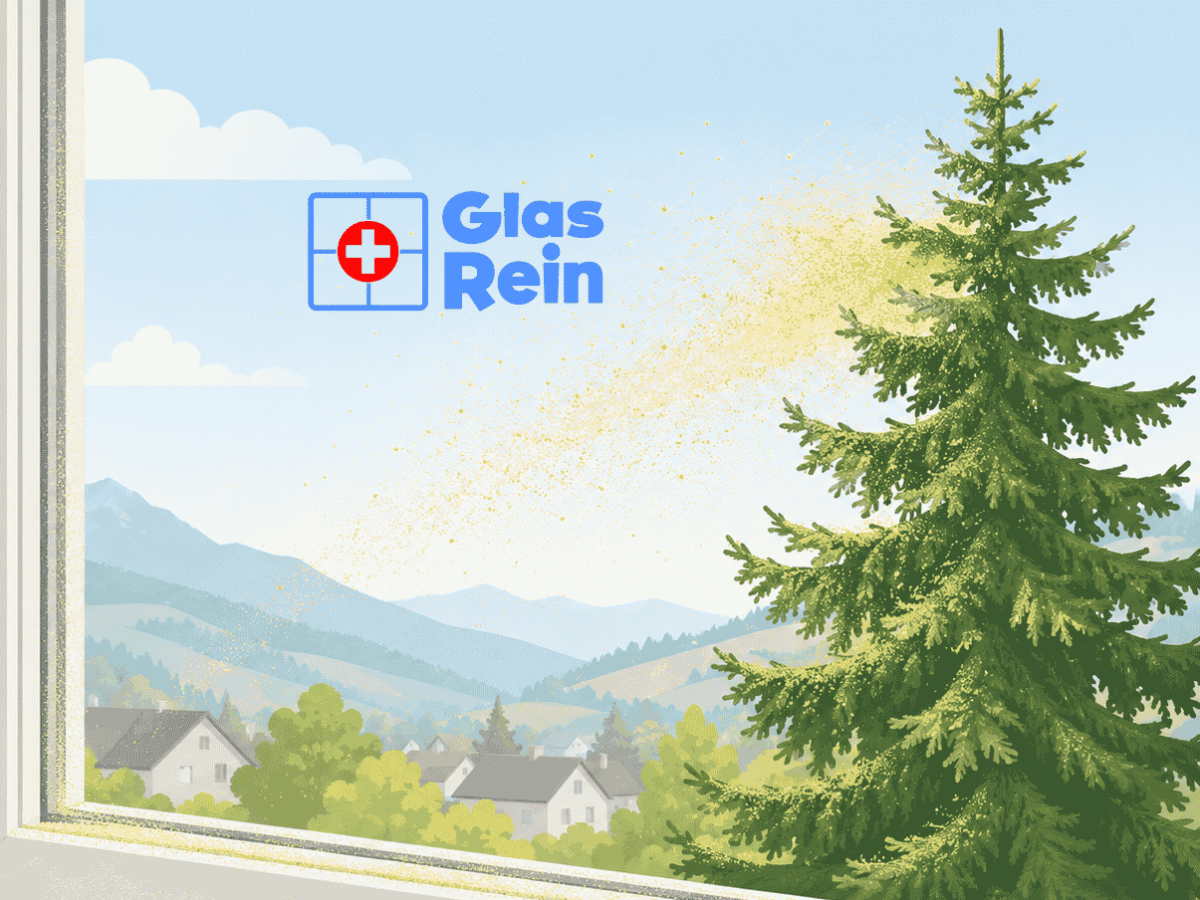
2026 focus: This article covers the conifer pollen season and cleaning afterwards. For the general spring guide, see Pollen and windows in Lucerne.
At the beginning of May, many people in Lucerne, Emmen and Kriens noticed the same thing: a fine yellow layer on windows, frames, blinds, cars, balcony railings and garden furniture. At first glance, it looked like Sahara dust or construction dust. This year, however, much of it came from conifer trees.
Spruce and pine trees released large amounts of pollen. Wind carried the fine grains across wide areas, so the yellow dust did not stay in the forest. It landed on city windows, lakeside apartments, shopfronts, skylights, conservatories and balcony glass.
In the Lucerne region, this is easy to understand. The city, the lake, traffic, forest areas and the Pilatus surroundings all meet in a small space. Pollen does not simply sit on glass. It mixes with dew, rain, road dust and fine particles. The result is a dull yellow film that makes windows look dirty even if they were cleaned only a few weeks ago.
Why Rain Is Not Enough
Many people wait for the next rain after a strong pollen period. It sounds logical. Rain removes some dust, but it rarely leaves windows clean.
Once pollen gets wet, it turns into a yellowish film. This film runs down the glass, collects along the lower edge and settles in seals, corners and window frames. After drying, it often leaves streaks and cloudy marks. Large glass surfaces, balcony glazing, south-facing windows and roof windows show these marks especially clearly.
In Lucerne and Kriens, this is often visible on windows facing the Pilatus area. In Emmen, pollen is frequently mixed with road dust and urban dirt. This is why proper Fensterreinigung Luzern after the pollen season is not just about appearance. It also helps protect frames, seals and glass surfaces from stubborn deposits.
What Pollen Does to Windows
Pollen is fine, light and persistent. On dry glass, it looks like powder. On damp glass, it becomes greasy. On warm glass, it dries quickly and leaves a matte layer that reduces clarity and light.
The most affected areas are:
Large windows, balcony glazing, conservatories, roof windows, shopfronts, window sills, external blinds, frames and insect screens.
Insect screens are often forgotten. They collect a surprising amount of pollen. If they are not cleaned, every time you open the window, wind can bring part of that dust back inside. For allergy sufferers, this is uncomfortable. For everyone else, it is simply annoying: you clean the glass, open the window, and the yellow dust returns.
How to Clean Windows After Conifer Pollen
The most important rule is simple: do not rub dry pollen across the glass. Pollen, sand and dust can act like fine abrasive particles. If you start with kitchen paper or a dry cloth, you mostly spread the dirt and may cause fine scratches.
A better order is:
-
Remove loose particles first Gently brush or rinse window sills, frames and lower profiles. Insect screens can be carefully vacuumed or rinsed.
-
Clean frames before glass If you clean the glass first and the frames afterwards, dirty water will run back onto the clean surface. Start with frames, seals, corners and sills.
-
Use a mild cleaning product After pollen, aggressive chemicals are usually not necessary. Lukewarm water with a suitable glass cleaner or mild detergent is often enough. Technique matters more than force.
-
Wet the whole glass surface evenly Do not only treat visible spots. Uneven cleaning often leaves marks and transitions.
-
Use a squeegee properly Work from top to bottom. Wipe the rubber blade regularly. Dry edges and corners with a clean microfibre cloth.
-
Do not forget blinds and tracks Swiss external blinds collect plenty of pollen. If they are lowered later, the dust can fall straight onto freshly cleaned windows.
Lucerne, Emmen and Kriens: Local Differences, Same Problem
In Lucerne, the lake plays a role. Moisture helps pollen stick to glass more quickly. After dew or light rain, yellow edges and water trails are especially visible.
In Emmen, windows often face a mix of pollen, traffic dirt and fine dust. Homes and businesses near busy roads notice the difference after a thorough cleaning immediately.
In Kriens, the proximity to forests, slopes and the Pilatus area adds another factor. This year, the yellow film was clearly visible in the region. So search terms such as Kriens Fensterreinigung, Emmen Fensterreinigung, Luzern Glasrein and Fensterreinigung Luzern are not abstract SEO phrases. They describe a real local situation.
When Professional Window Cleaning Makes Sense
Not every window needs a professional team. Small interior windows can often be handled at home. But there are situations where professional cleaning is the better option:
High windows, roof windows, conservatories, large glass fronts, shop windows, rental handovers, office spaces, staircases, heavily exposed windows and external blinds.
After an intense pollen year, the difference between quick wiping and proper cleaning is easy to see. Professionals use the right tools, the right order and safe methods. This saves time and prevents dirt from simply being moved from one surface to another.
At Glasrein, the idea is straightforward: clear windows without unnecessary fuss. If you need support in the Lucerne region, you can find more information here: Services. For appointments or specific questions, use the contact form.
The Best Time to Clean After Pollen
The best moment is not the first hot sunny day. Direct sunlight dries water and cleaning products too quickly, which often leads to streaks.
For window cleaning in Lucerne after the 2026 pollen period, the best time is after the strongest yellow dust has passed, on a dry and rather cloudy day. After that, small maintenance cleaning is usually enough, especially for balcony glazing, blinds and exposed windows.
For shops, offices, practices and restaurants in Lucerne, Emmen or Kriens, it is worth acting sooner rather than later. First impressions matter. Yellow edges on glass surfaces can make a building look neglected even when everything else is clean.
Small Care Tips Between Cleanings
A few simple habits help:
Wipe window sills regularly. Clean insect screens after the pollen period. Move external blinds before weeks of dust build up. Check frames and seals before airing rooms. Avoid polishing the glass every day with unsuitable cloths.
More cleaning is not always better. The right cleaning at the right time is what makes the difference.
Conclusion: Clear Views After a Yellow Spring
The 2026 pollen season left visible traces across Lucerne and the canton of Lucerne. Conifer trees released a striking amount of yellow dust. For allergy sufferers it was unpleasant. For windows it was simply stubborn.
Whether it is an apartment in Lucerne, a house in Kriens or a business in Emmen, after the pollen period a proper reset is worth it. Not dramatic, not exaggerated, just thorough.
More practical window care topics are available in the Glasrein Blog. To learn more about the team, visit About Glasrein. For common questions, the FAQ is a useful place to start. And when the yellow spring has left too many marks on the glass, Glasrein is ready to help in the Lucerne region.
FAQ
When is the best time for window cleaning in Lucerne after pollen season?
After the strongest pollen period, ideally on a dry and cloudy day. Direct sunlight can cause water and cleaning products to dry too quickly.
Is rain enough to clean pollen from windows?
No. Rain removes part of the pollen but often leaves yellow streaks, edges and cloudy marks.
Why were windows in Kriens so affected in 2026?
The location near Pilatus, forests and slopes makes pollen deposits more visible. In 2026, the yellow conifer pollen dust was especially noticeable in the area.
Does Glasrein offer window cleaning in Emmen and Kriens?
Yes. Glasrein serves Lucerne and the canton of Lucerne, including Lucerne, Kriens and Emmen. Quote · FAQ · Contact